



A significant danger to maize productivity is the stalk rot complex, which is especially noticeable during the flowering and pre-harvest phases. The most devastating disease in this complex is charcoal rot, which is caused by the fungus Macrophomina phaseolina.
Agricultural areas with high temperatures and frequent droughts, as well as conditions exacerbated by climate change, have seen an increase in M. phaseolina prevalence in recent years. In South Africa, reports of charcoal rot have become more frequent, especially in Mpumalanga, the Free State and North West.
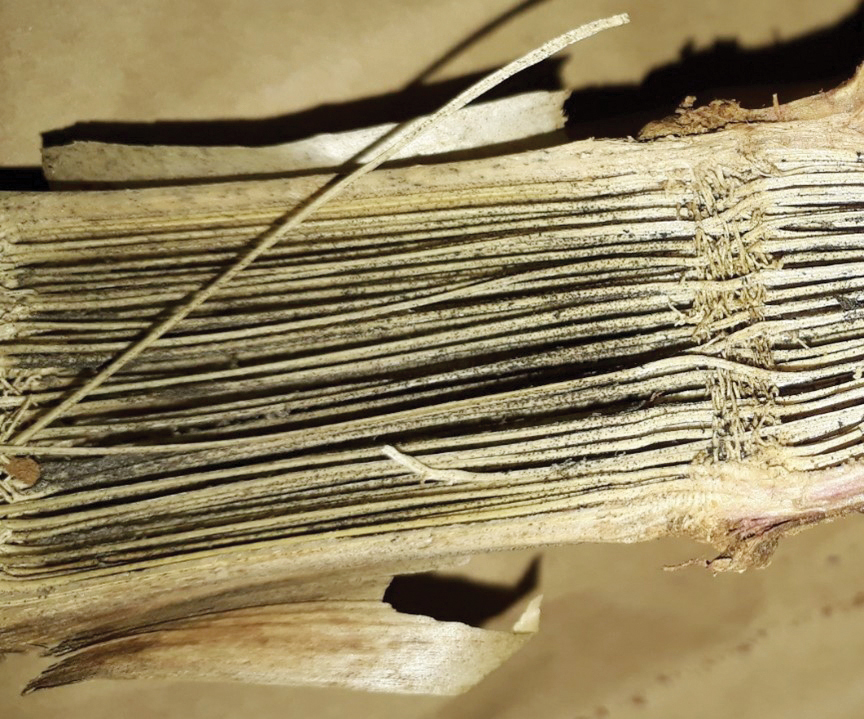
M. phaseolina survives in the soil as microsclerotia (Photo 1) and infects maize through the roots, eventually spreading to the stalk and vascular system. This infection disrupts water and nutrient flow, resulting in wilting, lodging and premature plant death.
As the disease worsens, the fungus produces additional microsclerotia, which are then released back into the soil. There they can survive for years and cause new infections during hot, dry weather. M. phaseolina is a highly versatile pathogen with a broad host range, infecting over 500 plant species across approximately 100 families.
Its hosts include a wide array of economically important crops such as maize, common bean, cotton, soybean, chickpea, sorghum, millet, groundnut, potato, sweet potato, sesame, canola, sunflower, tobacco, tomato, strawberry, geranium and various other vegetables.
Background
EPIDEMIOLOGY
M. phaseolina thrives at temperatures between 25°C and 35°C, with prolonged drought conditions favouring disease development. Forecasts of climate change suggest that the average temperatures will rise by roughly 2°C and that rainfall will become more irregular and less frequent, both of which would increase the incidence of this infection.
It can overwinter and survive in the soil for several years by forming microsclerotia, especially if infected plant residues are left on the soil surface or added during field preparation.
SYMPTOMS
When conditions are favourable, M phaseolina can infect maize at an early stage of the plant’s lifecycle and cause a variety of symptoms, such as root rot, seedling blight, seedling damping off, collar rot, basal stem rot, stunting, chlorosis, wilting and premature senescence, in which the dry leaves stay on the stems. Charcoal rot can cause early leaf drying, plant lodging and tassel dropping by spreading from diseased internodes to the healthy nodes.
ECONOMIC IMPORTANCE
Maize plants become more susceptible to charcoal rot under elevated temperatures and reduced soil moisture. Under such conditions, yield losses may range from 10% to 60%, and in severe outbreaks, complete crop failure may occur. Following the breakdown of infected plant residues, the pathogen can persist in soil for up to three years, enabling it to infect new crops.
Host plant resistance
One of the research interests in charcoal rot is to identify resistance sources using genetically distinct germplasm evaluated across diverse agro-ecological zones. At the flowering and anthesis stage, maize stalks are inoculated with M. phaseolina-infected toothpicks (Photo 2A).
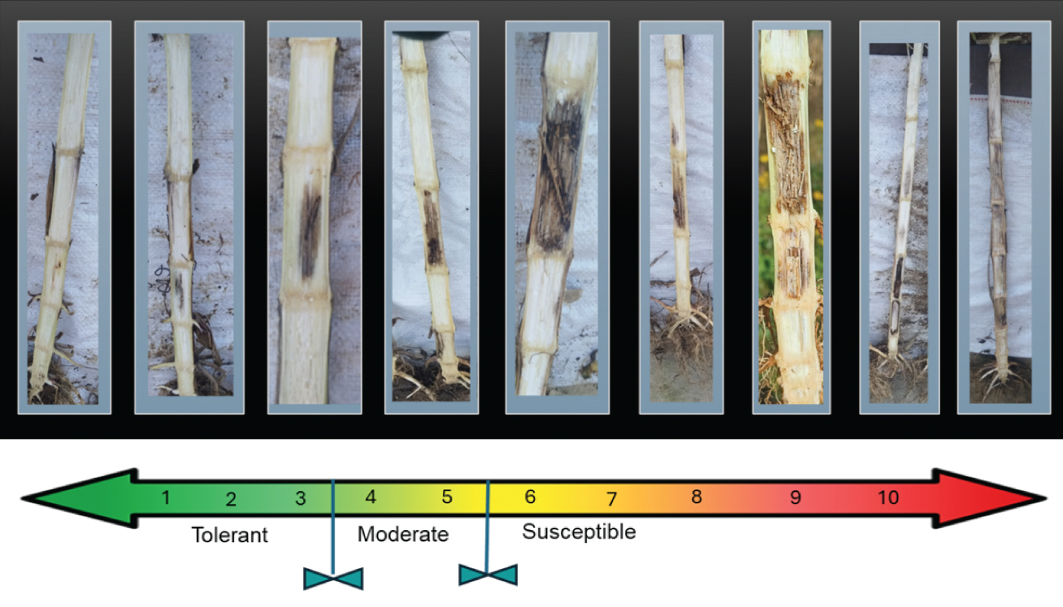
Charcoal rot disease ratings are conducted on mature individual cultivars by splitting open the stalks and capturing the lesion sizes (Photo 2B), according to a disease severity scale (Shekhar and Kumar, 2012).
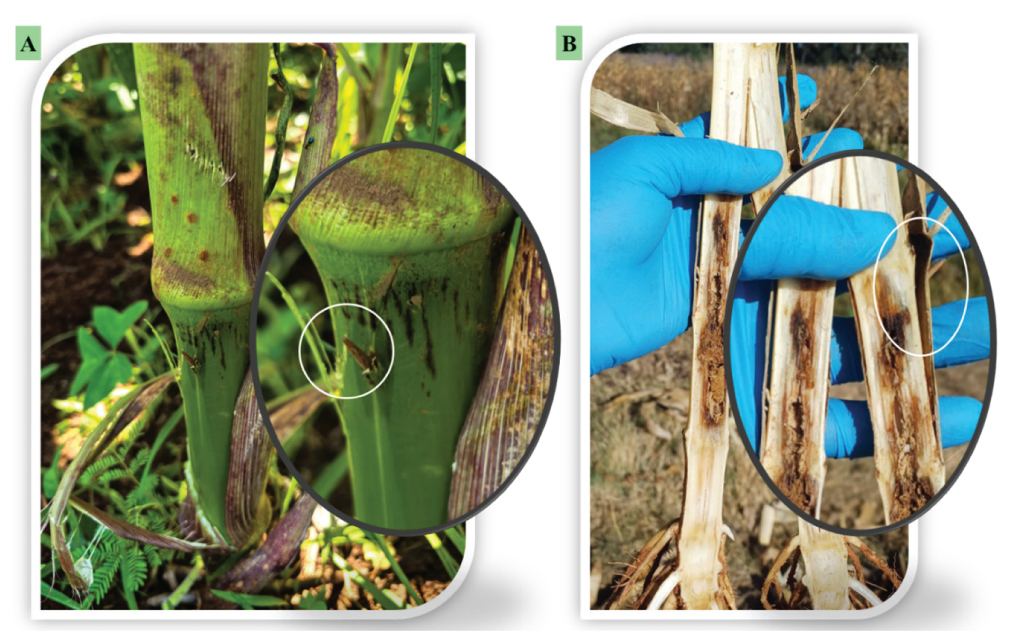
Photo credit: Tshegofatso Makgabo (A) and Thabo Baloyi (B).
These range from 1 (healthy or slightly discoloured at the site of infection) to 10 (discolouration of five or more internodes and premature death of the plant) – see Figure 1. If the disease is restricted to one internode, it indicates that the plant’s biochemical defence is effective.
Disease management
Disease surveys are vital for monitoring plant health, enabling early detection of new or spreading diseases, identifying key pathogens and their geographic distribution, and informing decision-making for effective disease management strategies to protect crops and ensure food security.
The ARC-GC is investigating an integrated disease management system for charcoal rot that includes the screening of cultivars for resistance. Cultural control, such as crop rotation, plant density and soil health practice, also receives priority.
Beneficial microorganisms such as Trichoderma spp. are among the biological control techniques being studied, and Bacillus spp. could also aid in suppressing the disease and sustainably encourage plant growth, among other things.
Future initiatives
Regular disease scouting on farms and breeding initiatives to mitigate yield losses should receive priority. Sources of genetic resistance and adaptable agronomic techniques in drought-prone environments ought to be studied. Make recommendations for long-term adaptive management plans that integrate residue control with host resistance.
Diagnostic guidelines detailing M. phaseolina disease symptoms should be made available to farmers for the timely detection of the disease in the field.
Summary
Charcoal rot is one of the most destructive diseases of maize during heat and drought conditions, affecting productivity and causing a significant grain yield loss. Yellowing and drooping of the leaves, discolouration, lodging of the stalks and tilting of the ears are all signs of the disease.
This disease is more likely to occur in arid regions and hot weather. As a soil-borne pathogen, the management of M. phaseolina remains a challenge. Therefore, agronomical practices such as crop rotation, correct plant density, proper irrigation, balanced nutrition, host plant resistance and biocontrol agents should be incorporated into management strategies.
For more information, please contact the authors, Theresa Bapela and Dr Belinda Janse van Rensburg, on 018 299 6310/11 or send an email to bapelat@arc.agric.za.
References
- Shekhar M and Kumar S, 2012. Inoculation methods and disease rating scales for maize diseases. Directorate of Maize Research. Indian Council of Agricultural Research. Pusa Campus: New Delhi, India