


As South Africa enters its 2025/2026 summer crop season, early forecasts from the Agricultural Conditions Assessment Committee (ACAC) suggest that favourable rainfall and temperature conditions could support a strong production year. Yet, as many experienced producers will confirm, a promising start does not guarantee a strong finish.
‘“Planting season may be coming to an end in some areas and have only started in others, but the real work has only just begun,” says Kobus van Zyl, senior agriculturalist at Omnia Agriculture. “Producers have very little control when it comes to the weather or climate, so they need to be fully in control of the factors they can influence – and roughly 80% of those controllable factors come down to timing.”
A practical post-planting checklist
With growing season officially underway, Van Zyl has compiled a practical post-planting checklist to help producers set their crops up for success:
1. SUSTAINABILITY AND SAFETY CHECKS
Farming sustainably is about more than soil health; it’s about ensuring the long-term profitability and productivity of the land. This includes responsible nutrient management, soil conservation, and safe handling of agricultural inputs like herbicides and pesticides.
“Sustainability means giving the next generation the same or better opportunity to farm successfully than we have today,” says Van Zyl. “It also involves safe disposal of containers and waste and maintaining compliance with environmental regulations,” he adds.
2. ASSESS CROP EMERGENCE AND STAND ESTABLISHMENT
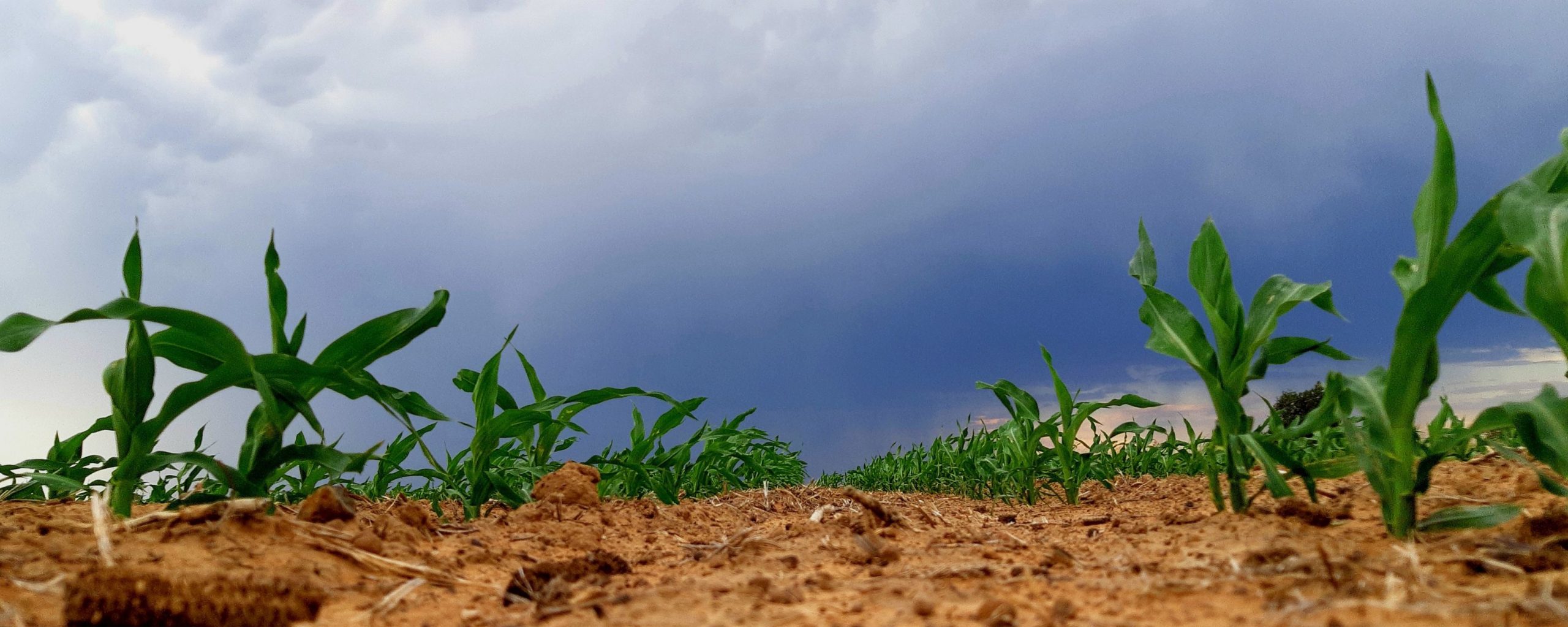
Van Zyl urges producers to inspect each field to ensure even crop emergence and identify problem areas early. “Issues like crust formation – where the soil hardens and prevents seedlings from breaking through – can severely affect establishment and final stand counts.”
If crusting does occur, mechanical action such as light rotary cultivation can help alleviate the problem. Early identification also allows producers to spot replanting needs before the window for corrective action closes.
3. MONITOR WEATHER AND CLIMATE CLOSELY
With many parts of the country experiencing favourable rainfall this season, producers must keep a close watch on local weather conditions. “Excessive rain can delay field access, limit oxygen in the soil, and stunt root growth,” says Van Zyl. “Conversely, extended dry spells or high winds can cause soil erosion and crop damage.”
Using accurate, localised forecasts helps producers plan fertiliser applications, pest control, and irrigation scheduling at the right time, preventing both waste and risk.
4. SCOUT FIELDS AND TRACK DATA
Regular crop scouting is one of the most effective ways to detect challenges early. This includes assessing plant health, identifying pest and disease symptoms, and capturing data on field variability.
Omnia’s SUPER-5™ satellite imagery is one example of technology helping producers pinpoint underperforming areas so that corrective action can be taken before yield losses escalate. As Van Zyl explains, “If you know about a problem, you can manage it. But you cannot manage what you are not aware of.”
5. WEED, PEST AND DISEASE CONTROL
Once scouting is complete, implement timely control measures. A weed-free environment is essential during early growth, as weeds compete aggressively for nutrients, water, and sunlight. Early pest and disease control is equally vital. The goal is to prevent outbreaks rather than fight them mid-season when the damage is already done.
6. EQUIPMENT MAINTENANCE AND CALIBRATION
Before any top-dressing, fertiliser application, or chemical spraying, ensure all machinery is correctly maintained and calibrated. Incorrect calibration can lead to uneven application, product wastage, or even crop injury. This step is especially important when crops are young and most sensitive to input errors.
7. MANAGE NUTRIENT TOP-UPS AND FERTILISER TIMING
Nutrient management remains one of the most yield-defining aspects of crop production. Apply top-dressings and supplements at the correct growth stage to avoid deficiencies or excesses. Under irrigation, this may involve staged nutrient applications through fertigation systems, while dryland producers should align fertiliser plans with rainfall patterns to maximise uptake efficiency.
8. IRRIGATION SCHEDULING AND WATER MANAGEMENT
Water management should integrate both rainfall and irrigation volumes. “Over-irrigation can cause nutrient leaching and root stress, while under-irrigation can reduce yield potential,” notes Van Zyl, who says regular soil moisture checks help balance water use and ensure the crop’s needs are met throughout development.
9. SOIL HEALTH MONITORING
While soil sampling may not occur immediately after planting, maintaining awareness of soil condition throughout the season is critical. Optimum root growing condition will also favour establishment of microbial populations. The focus must be to ensure that the “good guys” survives and thrives. Poor structure or compaction can restrict root growth and water movement. Producers should aim to preserve organic matter, avoid overworking wet soils, and address any visible signs of degradation.
10. FINANCIAL TRACKING AND INPUT MANAGEMENT
Finally, keep a close eye on budgets and input allocations. Conditions vary across fields, and not all areas will deliver the same yield potential. Van Zyl advises that producers adjust input spending accordingly: “If one field shows poor potential, rather redirect resources to areas with higher yield prospects. Using inputs wisely ensures sustainability both in the soil and on the balance sheet.”
Kobus van Zyl celebrates the dedication of every producer and looks forward to a season filled with growth, success, and shared achievements.