


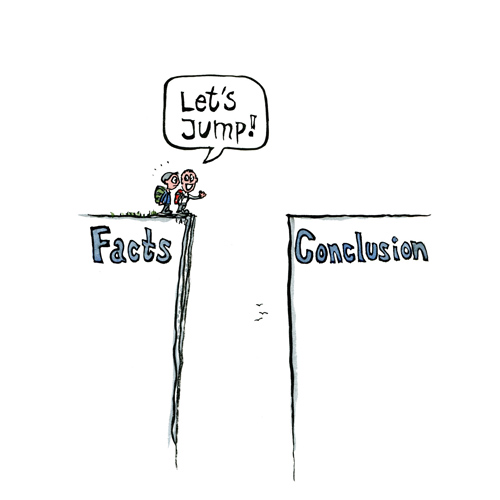

In our ‘arena’ – from the boardroom to the farm gate – people pride themselves on being ‘doers’. They value the ability to make quick calls on grain prices, staffing issues or shifting company strategies. But there is a thin, dangerous line between being decisive and being reactive.
When you react too quickly, you often fall victim to the ‘ladder of inference’ – a mental process that can lead to the single most expensive hidden cost in any business: Miscommunication.
The mental ladder
The ladder of inference describes how to move from a raw fact to a final action in milliseconds. You can do it so fast you don’t even realise you’ve left the ground.
How the ladder plays out in the world:
- The employee: Your manager doesn’t reply to an urgent message. Your brain jumps: ‘I’m in trouble.’ Your action: You spend the day anxious and unproductive.
- The farmer: A supplier misses a delivery deadline. Your brain jumps: ‘They don’t value my business anymore.’ Your action: You call them ‘guns blazing,’ damaging a decade-long partnership.
- The business owner: A partner suggests a new way of working. Your brain jumps: ‘They think I’m failing.’ Your action: You shut down a conversation that could have saved you thousands in efficiency.
The ‘reflexive loop’: The danger zone
The real danger is what you call the reflexive loop. This happens when your existing
beliefs dictate what data you see.
If you believe a colleague is lazy, you will only ‘see’ the five minutes he spends on his phone, while your brain ‘filters out’ the six hours of hard work he did before that. Your beliefs pick the data, the data strengthens the belief, and the ladder gets shorter and steeper every day.
The ‘bird’s-eye view’: How to climb down
To lead a successful team, farm or business, you must learn to pause at the rungs. Here is the process for effective communication:
- Trace your steps backwards: When you feel anger or anxiety rising, stop. Ask yourself: ‘What was the original piece of data that started this?’ Often, you’ll find the ‘data’ was tiny, but the ‘story’ you built on top of it was huge.
- State your ‘story’: One of the most powerful tools in leadership (championed by Brené Brown) is simply saying: ‘The story I’m telling myself right now is …’ ‘The story I’m telling myself is that this unread email means you’re unhappy with my work. Is that the case?’ It feels vulnerable, but it clears the air instantly and prevents weeks of resentment.
- Make your thinking visible: Don’t just present a conclusion – show your work.
- Don’t say: ‘You’re clearly not interested in this project.’
- Instead say: ‘I noticed you’ve missed the last two meetings (data). I’ve started to feel like this isn’t a priority for you (meaning). Am I missing something? (inviting feedback).’
- Challenge your filter: Force yourself to come up with three alternative explanations for the facts. Maybe the supplier’s truck broke down, maybe the manager is in a crisis or maybe the partner is just trying to help you scale.
The bottom line
Effective communication isn’t about being ’nice’ – it’s about being accurate. Whether you are managing a hundred hectares or a hundred spreadsheets, your biggest overhead isn’t fuel or salaries – it’s the friction caused by jumping to the wrong conclusions.
Next time you find yourself at the top of the ladder, ready to jump, take a breath. Look at the ground again. The best leaders aren’t the ones who react the fastest – they are the ones who see the most clearly.