

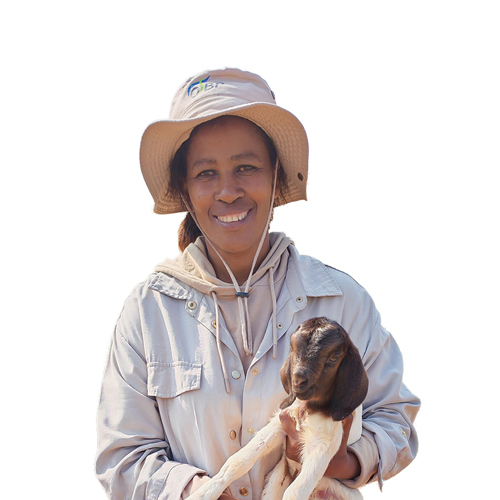
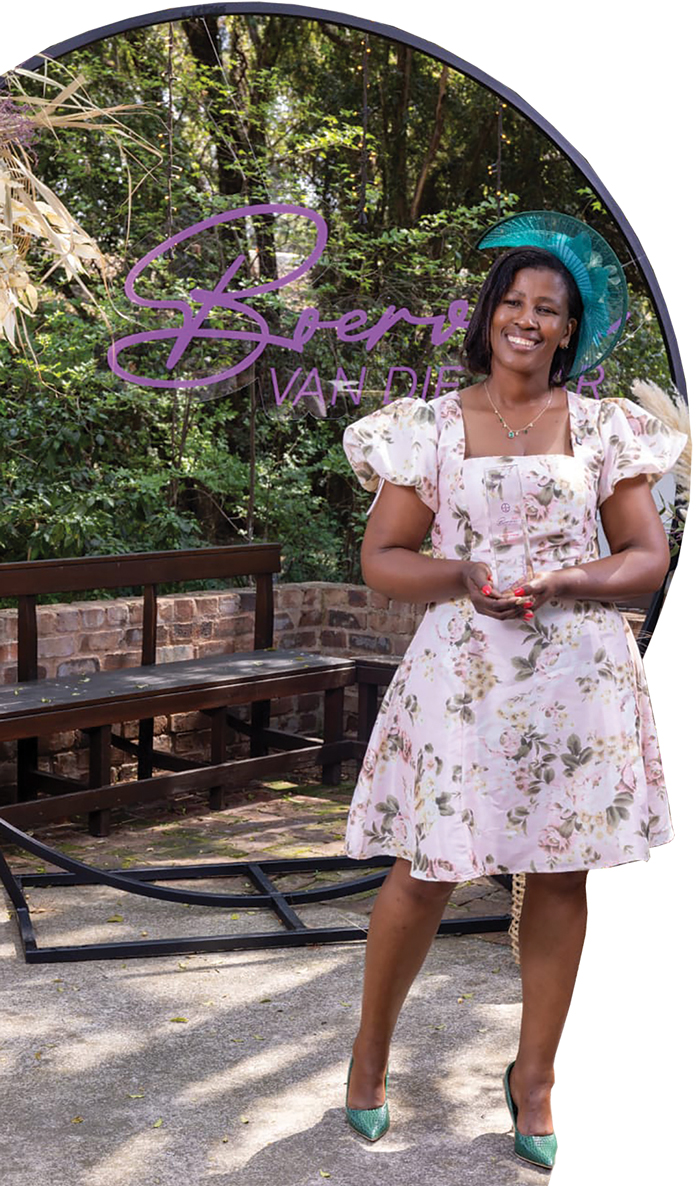
 Katlego Kubedi (48) is the proud recipient of Bayer’s Female Farmer of the Year Award for 2025. Her story is an inspiring one to share during Women’s Month. Katlego is proof that with the right mindset, perseverance and an eagerness to learn, one can literally rise from the ashes and build a life that inspires others.
TEN years ago, Katlego Kubedi gathered the corrugated iron from the ashes that were left after her ex-husband had set her shack alight, and with them she constructed the roof of her first chicken coop.
The courage to break free
Katlego was born in Khunwana Village in Tswaing, about 15 km from Kraaipan. Her parents relocated to Bethel Village in Itsoseng when she was in grade 11 and she completed matric at ZM Seatlholo Secondary School. She got married only one year later when she was 19 years old.
“My parents are from a very deep rural village, and their only dream for their daughter was to get married. My father was a builder and didn’t earn much. When you come from a poor background and marry someone of a certain standard, you will always be classified. My husband was very abusive and used my background against me,” Katlego recalls.
Four children were born from the marriage – Tlotlo (28), Kearoma (26) and twins Pakiso and Maduo (23). “I realised I couldn’t raise my children in an abusive marriage. I didn’t want my kids to grow up thinking that insulting and beating a woman is a good thing,” Katlego says.
“I couldn’t allow the abuse to continue and got out of my marriage. After 18 years I left with nothing – I took only my ID and my clothes.”
A new chapter
Katlego returned to Bethel Village and established a backyard garden with spinach, cabbage and beetroot. Some of the produce was for personal use, but she sold the majority to her fellow villagers.
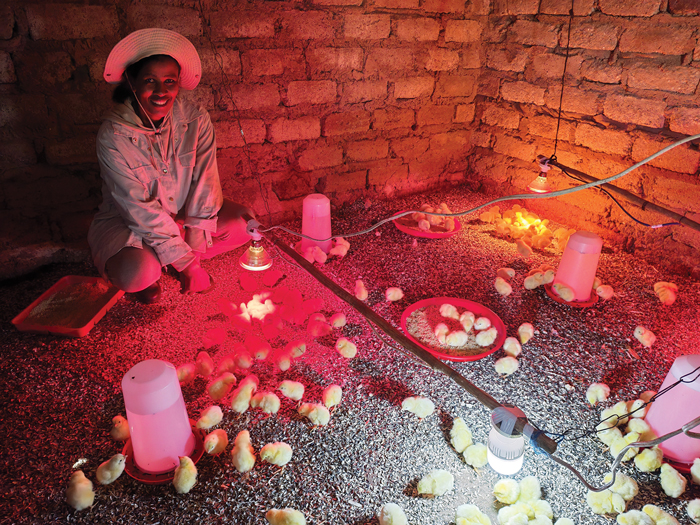
After the incident when her shack was set alight, Katlego was even more determined to succeed. “I knew I had to do something. As a little girl, I used to raise chickens for fun out of boredom. I realised that poultry is one of the easiest things to start with. You just need warmth, clean water and proper housing. If you can’t afford electricity, you can make a fire to keep the room warm,” she explains.
Her father helped her to put up her first coop, and Katlego started off with 30 broilers. “This is where my journey with farming started,” she recalls. She soon put up a layer’s house and now has three structures in total.
She initially obtained her chicks from Opti Chicks and later from Superior Chicks. “They sold them with a comprehensive vaccination table that taught me what I had to give at what time.
“Whenever I came across an ailment or something I was unfamiliar with, I went to NWK Retail in Lichtenburg or Mahikeng, and they advised me on the right products to use.”
Katlego supplies broilers and eggs to other villagers and tertiary education institutions in the area, and she also has government clients. By now, she is a well-known poultry supplier, but she also relies on social media channels such as Facebook and WhatsApp to advertise her products.
The broiler side of her farming operation provides valuable cash flow while Katlego has to wait for her crops to generate an income.
Trying her hand at crops
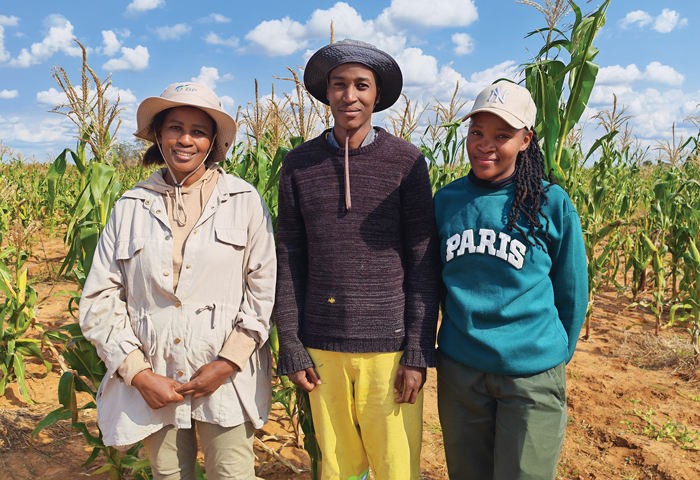
In 2023, Katlego planted 10 ha with sunflower. She financed the inputs with money she had saved from the broilers and layers. In 2024, she planted 15 ha of maize and later increased it to 30 ha in 2025.
“Morapedi Molema is a farmer in the Stella area and my first mentor. He showed me how to calibrate a planter and boom sprayer, and I rent his machinery.”
Katlego also became a member of Grain SA and is being mentored by Du Toit van der Westhuizen, Grain SA’s regional development manager in the Lichtenburg office.
“When you have an interest and love for something, you will do anything. I started to read everything I could about farming,” Katlego smiles.
She describes last year’s harvest as very good and boasts that she was able to buy a second-hand tractor with the profit she had made.
She plants Dekalb from Bayer and uses their chemicals. A fellow member of Women in Agriculture and Rural Development consequently nominated her for Bayer’s Female Farmer of the Year Award.
Award opens doors
Katlego was awarded the title in early September last year. She received DeKalb products valued at R15 000, but adds that the award itself is of immeasurable value to her as a farmer and that it bears significant personal meaning. “It’s something I didn’t even dream of. It’s a very big achievement and motivation to my children and other women.”
The award led to exposure to institutions such as North-West University (NWU), where the agricultural sciences department asked Katlego to partner on a regenerative agriculture trial.
“I never used to have soil samples analysed and knew nothing about monocropping. Since working together with experts from the university and Grain SA, I’ve realised the importance of having soil samples taken and analysed to determine the right cultivar and chemicals according to the soil’s needs.”
A woman in a man’s world
Katlego says she has many expenses as a female farmer who has to rent machinery. “Farming is dominated by men, and many of them in my village view me as a threat and are therefore unwilling to help. I try to brush it off. There will always be someone in another village who doesn’t view me as competition and who is willing to help.”
According to Katlego, crop theft is a massive struggle on communal land. “You have to hire people to guard the maize, and stray animals also cause havoc. Fencing is not really an option, as this also gets stolen.” Despite the challenges, Katlego is determined to succeed. “Farming is therapy to me. I was able to do it while raising my children. With farming … When you plant something, you put it in the soil. You pray to God: ‘Let it be the seed of hope. Let it lead to something so I can put bread on the table and generate pay for my workers.’”
“Farming gives hope to both the person I employ and myself, and it pays a salary. It gave me a place I can call home. This is why I will die a farmer.”
The success of a farmer like Katlego has a ripple effect on the community in which she lives. She is able to employ 30 seasonal workers from the village, as well as two tractor operators.
Katlego is also working hard at establishing a Boer goat herd. The males are sold at auctions and generate cash flow for when the broiler farm necessitates big expenses. “These two components complement each other very well. With the goats, it’s important to stay on top of supplements and vaccinations.”
A family affair
Maduo obtained a diploma in crop science from NWU last year and has since joined her mother in the farming operation. Tlotlo is currently studying environmental science, geography and computer studies at NWU.
“It’s a family business. We help and complement each other. I didn’t have the opportunity to study or work anywhere after matric. They are familiar with technology, and with an El Niño approaching, Tlotlo can give valuable advice on the crop side of the operation.”
Katlego’s advice to other women who wish to break free from an abusive relationship is to believe in themselves. “Not even psychologists or social workers would be able to get you out of that situation if you don’t break the cage you are living in.
“Women are always being judged, especially the young ones with their own dreams and hopes of independence. Forget about these expectations and just start somewhere!”
She encourages those women to think back to their days in primary school. “There was needlework, we were taught how to garden … It is winter. Go buy a needle and wool and make items that you can sell. Draw inspiration from your past life. There must be something you can do! Whatever you need, is already inside of you.
“Life is full of choices. Choose peace, growth, faith over fear and choose to keep going. Your choices today shape your tomorrow.”
She thanked Bayer and North West’s Department of Agriculture, especially the Mafikeng office, for their contribution to her success. “I’m here because one of their extension officers saw my work and recommended classes I could attend to expand my knowledge.
“To everybody who took part in this journey – my community, my customers – I am very grateful!”