


 The decline in per capita food production for small- and medium-scale producers in South Africa is fundamentally caused by soil fertility depletion, among other factors (Bjornlund et al., 2002). To date, there is insufficient information available to producers on the spatial and temporal variability of soil nutrients to help them maximise crop productivity.
THE sustainable and efficient use of agricultural land, amongst others, depends on soil properties. These characteristics directly affect the phenological growth and development of crops (Ormanci and Dengiz, 2025). Soil fertility, which is defined as the ability of soil to sustain plant nutrition, is a key factor.
Soils are heterogeneous, diverse and dynamic, often characterised by high spatial and temporal variability across scales, from the point scale to the global scale. This variability in both natural and managed ecosystems has been driven primarily by physical, hydrological and biological processes (Santar et al., 2008). It is necessary to understand the quality of these soil properties in detail and to use and manage them to your own benefit.
Spatial and temporal soil nutrient variation
Soil nutrient variation is widely influenced by the inherent soil properties (parent material), precipitation and land use. Over time, soil nutrients may be depleted from the topsoil, leading to soils with lower nutrients in the root zone, and/or may be improved in the soil through soil nutrient build-up programmes. Multiple studies have demonstrated that a soil nutrient deficiency is one of the primary factors for low and limited agricultural output and food insecurity in most African countries (Haileslassie et al., 2005; Yuan et al., 2025).
Since soils are heterogeneous, nutrient variability may occur even in the same type of soil or
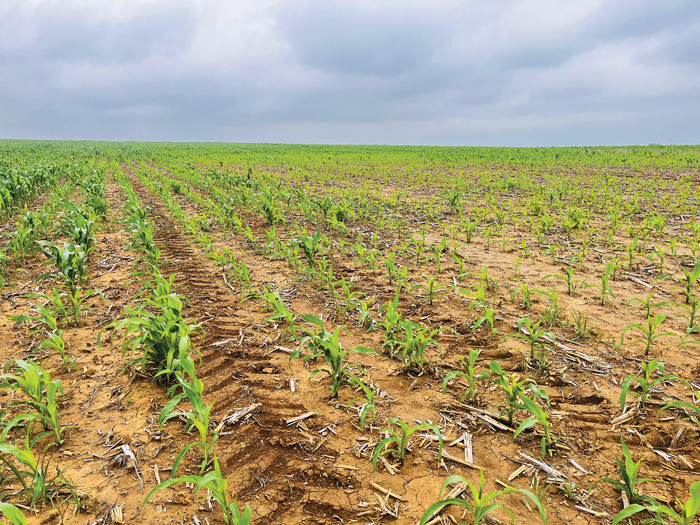
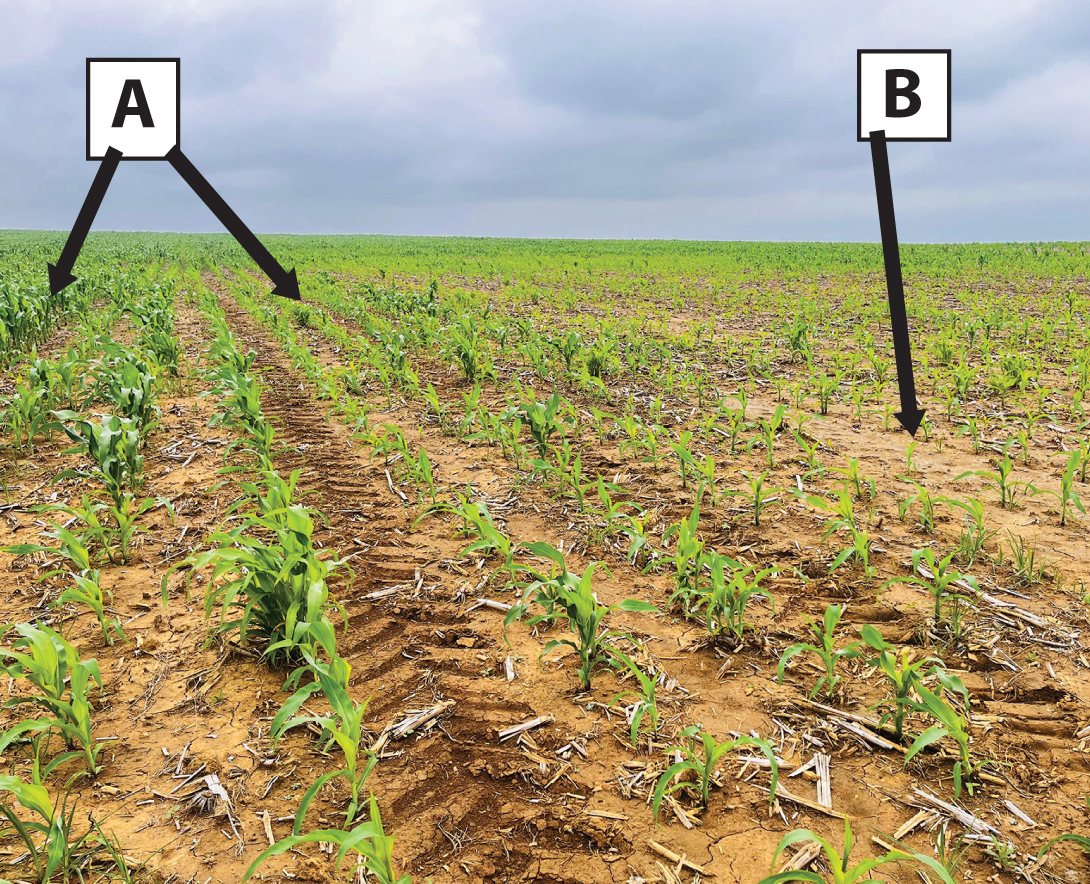
in the same soil community (Du Feng, XuXuexuan, and Shan, 2008). In some cases, the soil colour, variation in vegetation distribution and/or variation in the distribution of natural plant species can signal possible soil nutrient variation on the lands. Photo 1 shows uneven maize growth across the cultivated land. This may indicate spatial differences in soil biological, physical or chemical properties, caused either by natural factors or by cultivation practices.
Anthropogenic effect on soil nutrient spatial variability
Most producers use a flat-rate fertiliser application to achieve sustainable yields. This technique may yield less output because more fertiliser inputs are used on soils that do not require higher application rates, leading to excess nutrient leaching.
Some soils may not meet crop nutrient demands due to inadequate fertiliser being applied. The loss of soil nutrients/organic matter, salinisation and acidification are among the soil chemical degradation factors caused by land use practices (FAO, 2025).
Producers can improve soil health and maximise profits through variable-rate techniques for a better return on investment, while managing less fertile lands by adopting corrective or nutrient rectification strategies on these lands.
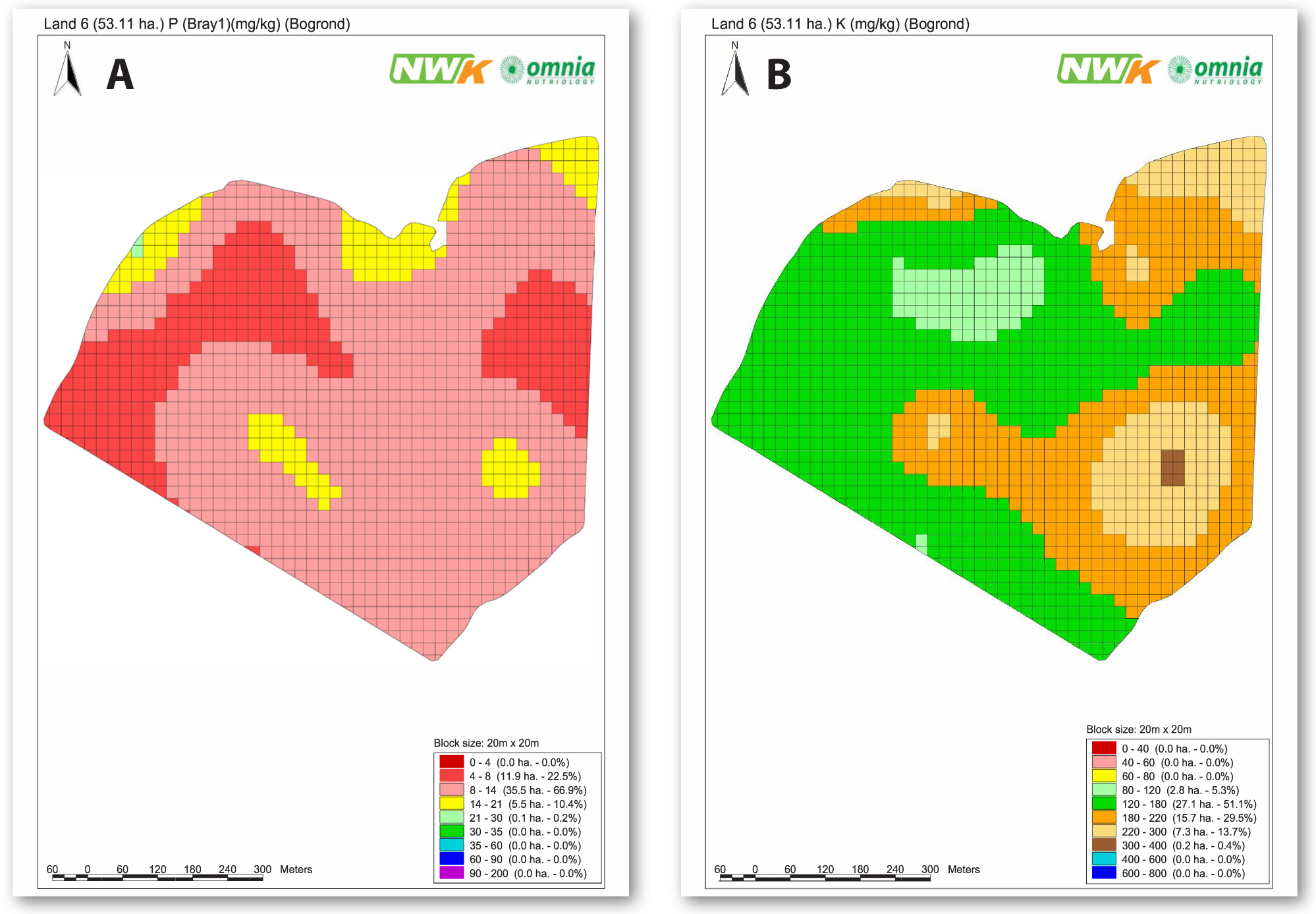
Nutrient maps are shown in Figure 1, where the spatial distribution of potassium (A) and phosphorus (B) was mapped. There are various levels of these elements in the soil, indicated
by colour variations, and each level is explained in the legend. Crop performance will vary significantly, influenced by the soil’s varying macro- and micro-elements. This information can
be used by producers to adopt variable fertilisation programmes to apply fertiliser inputs that
will meet crops’ nutrient demands.
Soil nutrient losses under cropland are mainly caused by crop yield and residue removal, leaching and soil erosion. Soil erosion may cause substantial nutrient losses in annual crop production. In brief, soil water erosion occurs when water travels from highland areas to plains or flatlands during periods of high rainfall. It leads to the removal of nutrient-rich fine soil particles from the topsoil (carried away by water), resulting in infertile soils (Swafo and Phesheya, 2023).
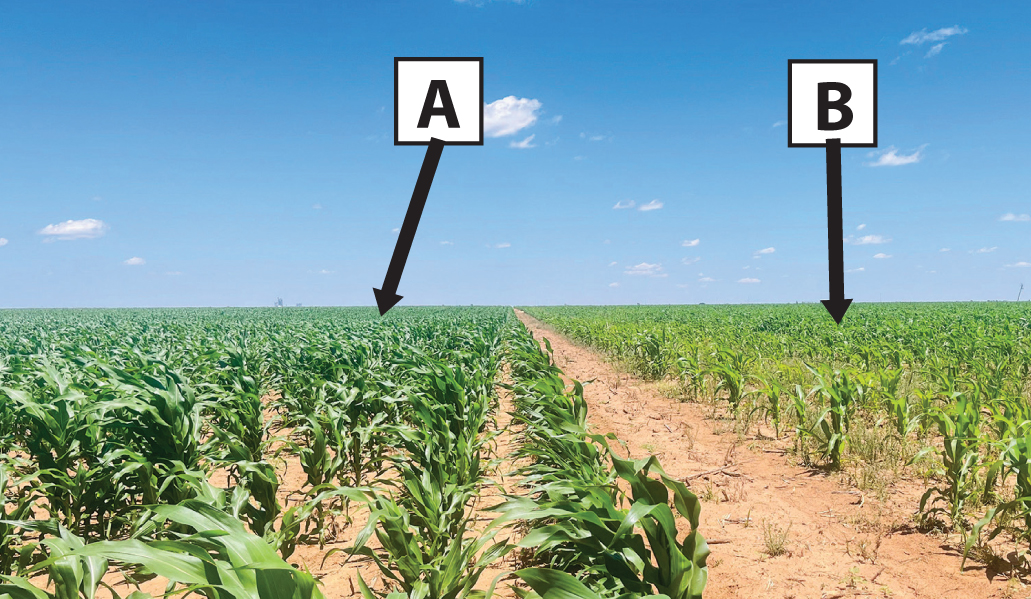
Soil nutrient variation often leads to reduced crop production, inconsistent crop growth and yield. Photo 2 shows two different maize fields planted on the same date, with similar cultivars and types of fertilisers. The land plot A shows maize that was planted according to a well-planned fertilisation recommendation programme based on soil-available nutrition, soil potential and the crop’s nutrient demands. The land plot B shows a maize plantation fertilised according to a flat-rate fertilisation programme not aligned with the available soil nutrients.
Determine and map soil nutrient spatial variation
To characterise variation in land-use capability, a soil survey must be undertaken to determine a precise and scientific inventory of the various soil types, their nature and the extent of distribution. Assessing the distribution of soil nutrient spatial variability in relation to site characteristics such as the climate, existing land use, landscape position and other variables is critical for predicting the effect and rates of ecosystem processes on soils (Denton et al., 2017).
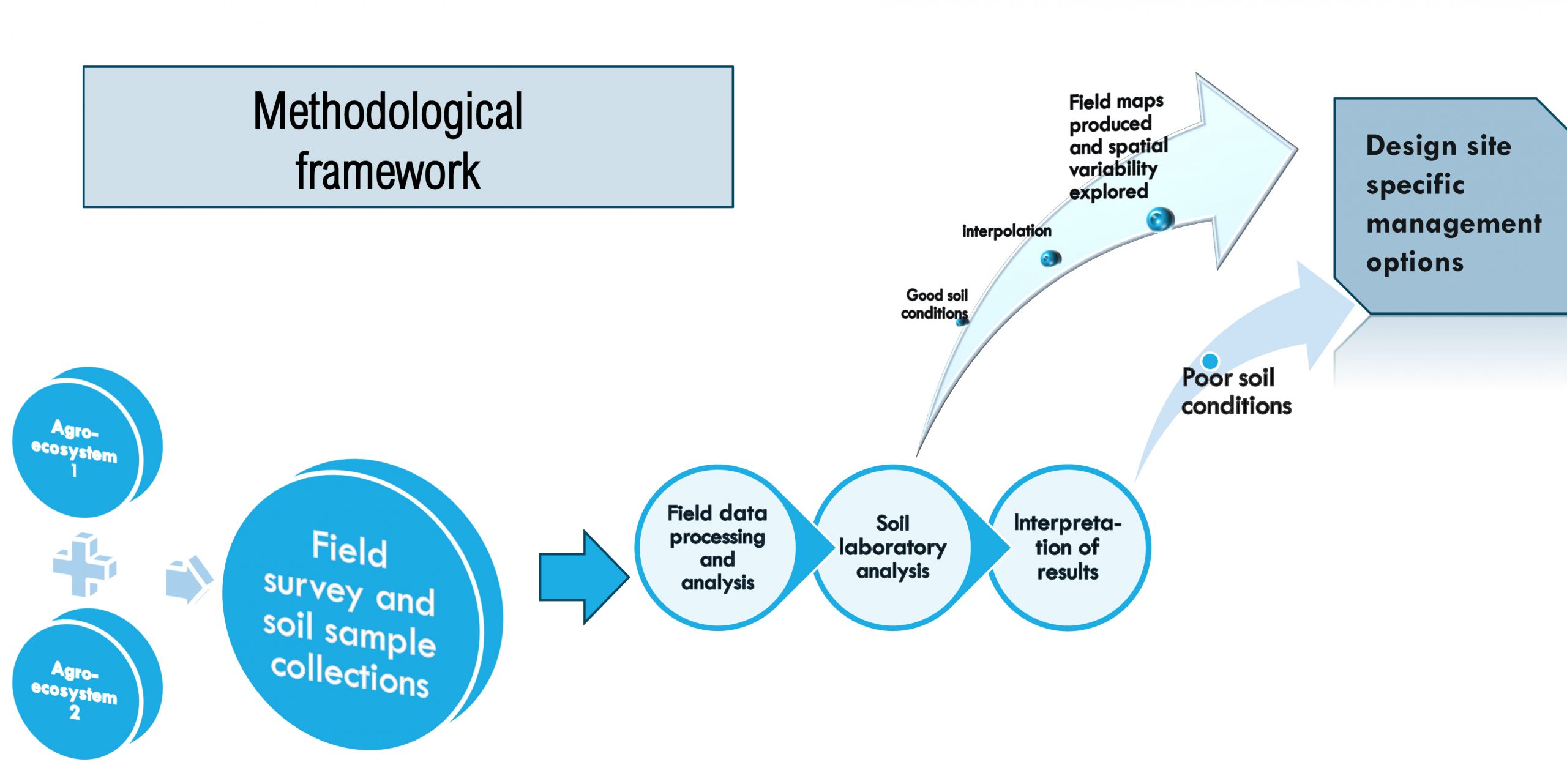
A methodology to design site-specific management was developed and is shown in Figure 2. Field data and soil samples are collected and then taken for laboratory chemical analysis. The field data, together with the laboratory results, are processed and used to produce site maps and site-specific management options for the fields and soils.
How to use precision farming to maximise production
Precision farming starts with soil sampling, which uses GPS-guided, grid-based (e.g., 2 ha) or zone-based and geo-referenced core collection to create site-specific nutrient maps for variable-rate applications.
This method of soil sampling helps producers to develop management zones and prescription maps in precision agriculture. It advances the accuracy of rates and placement of necessary inputs. Soil fertility is improved through proper land use and site-specific management practices.
In a case study, soil data were collected from the same land with a gap of 15 years in-between. The results show significant improvement in soil nutrition values of the soil-organic carbon, soil pH, soil-available P and K levels (Table 1),indicating that soil nutrients can be improved over time in the soil. The following soil parameters significantly improved: Soil pH, soil organic matter (SOM), soil-available phosphorus (AP) and potassium.
Conclusion
Understanding the spatial variability of soil properties and their temporal changes is essential for soil fertility management and agricultural production. Soil management strategies vary widely among producers due to differences in producers’ wealth status and production practices. Fertiliser and soil correction recommendations should consider these differences.
The scale-dependent nature of soil variability necessitates regular monitoring of essential soil parameters to tackle soil fertility issues. Furthermore, awareness of these issues will prompt growers to implement corrective measures to enhance their production or eliminate farming practices that cause soil degradation.
In summary, it is crucial to understand that infertile and low-potential soils lead to unhealthy conditions, which force producers to spend more money with minimal return on investment. Building soil health may take a longer period but it has long-term sustainable benefits to crop productivity and improves the ecosystem in many ways.
References
- Bjornlund V, Bjornlund H and Van Rooyen A, 2002. Why food insecurity persists in sub-Saharan Africa: A review of existing evidence. Food Security, 3;14(4):845-864
- Crop Nutrition.com. 20??. The role of spatial variability in nutrient management. https://www.cropnutrition.com/resource-library/the-role-of-spatial-variability-in-
nutrient-management/. Accessed:22/01/2026 - Denton OA, Aduramigba-Modupe VO, Ojo AO, Adeoyolanu OD, Are KS, Adelana AO, Oyedele AO, Adetayo AO and Oke AO, 2017. Assessment of spatial variability and mapping of soil properties for sustainable agricultural production using geographic information system techniques (GIS). Cogent Food and Agriculture, 3: 1279366
- Du Feng LZ, XuXuexuan ZX & Shan L, 2008. Spatial heterogeneity of soil nutrients and above-ground biomass in abandoned old-fields of Loess Hilly region in Northern Shaanxi. China. Acta Ecologica Sinica, 28, 13-22
- FAO, 2025. Addressing land degradation for a sustainable future. https://www.fao.org/interactive/2025/tackling-land-degradation/en/. Accessed 11/05/2026
- Guo B, Zhou J, Zhan L, Wang Z, Wu W & Liu H, 2024. Spatial and temporal variability of soil pH, organic matter and available nutrients (N, P and K) in Southwestern China. Agronomy,14, 1794
- Haileslassie A, Priess J, Veldkamp E, Teketay D & Lesschen JP, 2005. Assessment of soil nutrient depletion and its spatial variability on smallholders’ mixed farming systems in Ethiopia using partial versus full nutrient balances. Agriculture, Ecosystems and Environment, 1:108:1-16
- Ormanci IF and Dengiz O, 2025. Establishing and verifying soil quality index model based on GIS and remote sensing for cultivated lands under semi-humid terrestrial ecosystem. International Soil and Water Conservation Research 13:379-394
- Swafo SM & Dlamini PU, 2023. Utilisation of intrinsic and extrinsic soil information to derive soil nutrient management zones for banana production on a smallholder farm. Land, 12(9), 1651
- Santra P, Chopra UK, Chakraborty D, 2008. Spatial variability of soil properties and its application in predicting the surface map of hydraulic parameters on an agricultural farm. In: Current Science. Bengaluru, India: Current Science Association. p. 937-945
- Tang L, 2024. Soil fertility, plant nutrition and nutrient management. Plants (Basel),14(1):34
- Yeneneh N, Elias E & Feyisa GL, 2022. Assessment of the spatial variability of selected soil chemical properties using geostatistical analysis in the northwestern highlands of Ethiopia. ACTA agriculturae scandinavica, section B soil & plant science, 72(1) 1009-1019
- Yuan Z, Tian H, Xu S, Liu X, Olayide O & Li L, 2025. Soil phosphorus deficits and trade exacerbate African food shortage. Resources, Environment and Sustainability, 21