


 Respect cannot be demanded into existence. It grows when people feel seen, valued and treated with dignity – especially when expectations are not met. One often assumes that respect flows from a title, hard work or what you believe you deserve. Yet entitlement – the belief that others owe you recognition, special treatment or flawless service – rarely produces genuine regard. More often, it creates distance.
Long after a conversation ends, people may forget the details of what was said or exchanged. They are far more likely to remember how the interaction made them feel. This emotional residue is a meaningful part of personal impact and, over time, of legacy.
Two mindsets, two very different signals
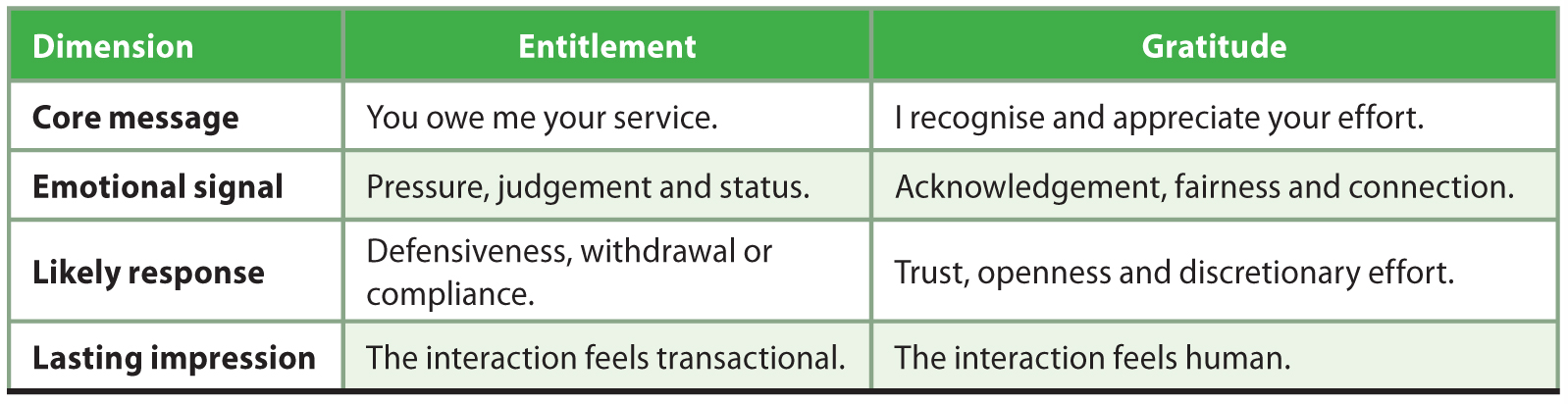
Human beings read tone, status and intent quickly. An entitled approach signals threat and hierarchy, while a grateful approach signals recognition and safety. The contrast changes both the emotional climate and likelihood of constructive action (Table 1).
What happens beneath the surface
THE ENTITLED PERSPECTIVE
For the person making the demand, the thought “I am owed this” creates vigilance for mistakes. Frustration arrives quickly, empathy narrows and the interaction becomes a test of whether others will comply.
For the person receiving the demand, contempt or aggression can register as a social threat. Stress rises, attention shifts towards self-protection and genuine connection becomes less likely. The person may remain polite or complete the task, but the cooperation is driven by pressure rather than care.
THE GRATEFUL PERSPECTIVE
Genuine acknowledgement changes the starting point. Expressing appreciation can reinforce positive emotion and lower interpersonal tension for the giver. For the receiver, being seen and valued supports trust, belonging and a greater willingness to help.
The exact biology of any individual interaction is complex, but the practical pattern is clear: Threat tends to narrow behaviour, while appreciation creates room for connection and problem-solving.
High standards
This principle is not limited to leadership roles. It applies when speaking to a colleague, a technician resolving a fault, a person behind a counter or anyone assisting with a routine request – from the boardroom to the front desk. Entitlement can demand compliance, while respect is freely given when people feel acknowledged as human beings.
WITHOUT HUMILIATION
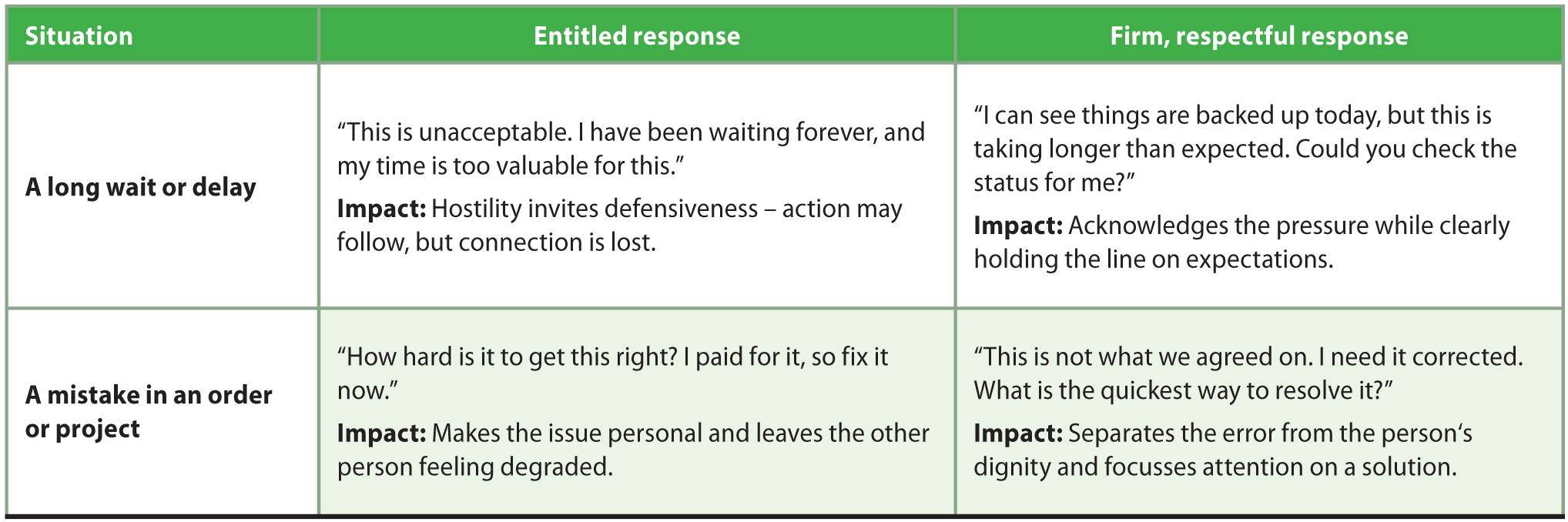
Choosing respect does not mean accepting poor service, staying silent or pretending that a failure did not occur. Standards matter. The distinction lies between holding someone accountable for the problem and using the problem to diminish the person (Table 2).
Tone, intent and legacy
When service fails, entitlement sees an inferior person who has ruined the day. A grounded mindset sees a human being who may have made a mistake or may be working inside a broken system. This difference in interpretation shapes everything that follows.
Entitlement uses error to assert dominance. It may secure a corrected meal, a revised deliverable or a refund, but it leaves a toxic footprint. Respect uses clarity to solve the problem. It allows you to be firm, specific and unyielding on quality while preserving the dignity of the person in front of you.
Even in conflict, people remember how someone handled the moment.
Firmness wrapped in respect builds credible authority.
Aggression wrapped in entitlement leaves resentment.
THE BOTTOM LINE
Gratitude gives dignity. Entitlement demands respect. Your legacy is how you treat people. And the way you make people feel in their interactions with you is what they will remember, and it becomes part of how they view you as a human being, partner, parent, teacher, co-worker, director or mega farmer – your legacy.